Weak, peeling nails can turn everyday tasks into small frustrations: a snagged edge catches on a sweater, or a nail splits while opening a package. If you are searching for how to strengthen weak nails, a hardening polish may seem like the obvious answer. But nail weakness can have different causes, including repeated wetting and drying, harsh products, or underlying health issues. The right approach depends on what is happening.
There is plenty of interest in nail care. Grand View Research estimated the global nail care market at USD 23.41 billion in 2023. That figure describes a broad product market, not proof that any nail strengthener works. A useful comparison of China’s nail strengtheners should therefore look beyond packaging claims. Check the ingredient list, directions, and warnings, and consider whether a product suits your routine. Small details matter.
The American Academy of Dermatology recommends practical habits such as keeping nails moisturized, limiting prolonged water exposure, and wearing gloves for wet work. These steps may help reduce avoidable damage, but they are not a diagnosis or a guaranteed fix. No quick coat solves everything. Persistent splitting, pain, swelling, or changes in nail color deserve attention from a qualified healthcare professional. This guide will compare common strengthening options and everyday care with a cautious eye. Some advice may feel ordinary. Ordinary can still help.
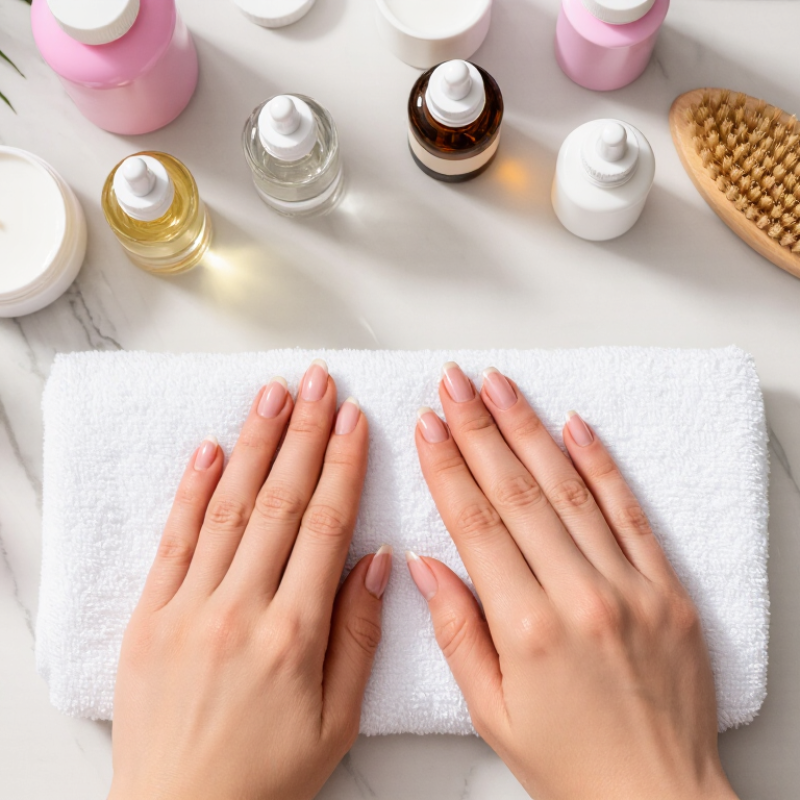
Nail strengtheners are usually clear or tinted coatings that create a temporary protective layer over the nail plate. Some formulas use film-forming ingredients, such as resins, to help reduce everyday bending and edge splitting. They do not rebuild damaged nail tissue. Nails are made of nonliving keratin, so visible improvement depends on new growth.
A strengthener may help when nails peel after frequent washing, cleaning, or polish removal. Apply a thin coat to clean, dry nails, including the free edge, and follow the product directions. Too many layers can feel stiff. That is not always helpful: a very rigid nail may snap rather than bend. Remove the coating gently, and give nails breaks if they become dry or sensitive. Small habits matter. Gloves during dishwashing can limit repeated soaking, while cuticle oil helps keep surrounding skin comfortable.
Results take time. Fingernails grow slowly, so a damaged area may need several months to grow out. I would not treat a coating as a cure for persistent weakness. If nails suddenly change color, separate from the nail bed, or remain unusually brittle, a healthcare professional can assess possible causes. Some advice online makes strengtheners sound universal; they are not. A simple routine and careful observation are often more useful than applying more product.
How nail strengtheners help: Growth rates are approximate averages and vary between people. Strengtheners form a protective coating that can help reduce splitting and breakage; they do not change the nail’s natural growth rate.
Weak, brittle, or peeling nails often reflect repeated stress rather than one missing nutrient. Daily cycles of soaking and drying—washing dishes, swimming, or frequent handwashing—make nail plates expand and contract. The edge may begin to split. Small habits matter.
Cleaning products and prolonged water exposure can dry nails and the skin around them. Picking off polish or scraping away gel may lift thin nail layers. Tight shoes, typing, and opening cans with your nails can cause tiny injuries. A little friction adds up. Aging can also slow nail growth and increase dryness. Not every brittle nail signals a deficiency; iron or thyroid problems are possible, but symptoms and appropriate tests matter more than guessing.
A sudden change in several nails, pain, swelling, yellowing, or nail separation deserves medical assessment, especially if it persists. Fungal infections, skin conditions, and some medicines can affect nail appearance. It is easy to assume peeling means the nails are simply weak; that can overlook repeated exposure or an underlying issue. Note when the changes began and which nails are affected.
In China, nail strengtheners generally fall into three groups: hardening coats, flexible conditioners, and ridge-filling base coats. Hardening coats leave a firmer film on the nail. They may help peeling tips feel less fragile, but can feel too rigid with repeated use. Conditioners often contain oils or humectants that soften dry nail edges and cuticles. Ridge fillers smooth visible grooves before polish. Some formulas feature keratin, calcium, or vitamins, but these do not rebuild the nail from within. The nail plate is dead keratin. That distinction matters.
Grand View Research estimated the global nail care market at USD 11.07 billion in 2023, with projected growth of 5.3% annually from 2024 to 2030. This signals broad demand, not proof that any ingredient works. For splitting nails, a flexible conditioning coat may be more comfortable than a very hard finish. Apply it to clean, dry nails, and follow the product label. Check the ingredient list if your skin is sensitive. Stop using it if redness or burning appears. Keep nails short while they recover, and wear gloves for frequent dishwashing. A small routine can help. Results vary, and I would not expect a coating to fix every cause of weak nails.
Choosing a nail strengthener starts with identifying the problem. Peeling edges often follow repeated wetting and drying, while thin, flexible nails may benefit from a protective, flexible coating. A very hard formula can make already brittle nails feel stiff, so avoid choosing strength by “hardness” alone. The American Academy of Dermatology notes that fingernails grow about 3 millimeters per month; allow several weeks to judge whether a routine helps. Small changes take time.
Check the ingredient list and directions. If your nails split, look for a coating that reduces snagging and pair it with hand cream after washing. If they bend easily, consider a strengthening treatment used only as directed, rather than layering several products. Avoid ingredients that have caused you irritation before, and stop if you notice burning, redness, or swelling. A strengthener cannot fix every cause of weak nails; persistent changes deserve advice from a dermatologist.
Tips: Photograph your bare nails weekly in the same light. Keep them short, file in one direction, and wear gloves when washing dishes. It is easy to blame the product when water exposure or rough removal may be the real issue.
Weak nails often need gentler habits, not a stronger coating alone. Keep nails short while they recover, and shape the edges with a fine file in one direction. Avoid sawing back and forth or buffing the surface aggressively. Small changes matter. After washing your hands, apply a fragrance-free hand cream, working a little into each nail and cuticle. Wear gloves when washing dishes or using cleaning products, since repeated water exposure can make nails more prone to splitting.
For a nail strengthener, choose a simple product with clear directions and apply only as often as its label recommends. Stop using it if you notice burning, redness, or increased brittleness. Take breaks from polish and harsh removers, especially if your nails feel dry. Progress takes time; nails grow slowly, and one week may show little change. I still forget gloves sometimes, so consistency can be harder than the routine sounds. If weakness appears suddenly, or comes with pain, unusual color, or separation from the nail bed, consult a healthcare professional rather than covering it up.
| Step | Care Action | How to Do It | Suggested Routine | Safety Notes |
|---|---|---|---|---|
| 1. Protect nails from water and chemicals | Wear gloves for wet or cleaning tasks | Use rubber or nitrile gloves when washing dishes, handling cleaning products, or doing prolonged wet work. Dry hands and nails thoroughly afterward. | Whenever doing household cleaning or extended wet work | Repeated wetting and drying can make nails more prone to splitting. Remove gloves if hands become sweaty and dry them before putting gloves back on. |
| 2. Moisturize regularly | Apply hand cream and cuticle moisturizer | Massage moisturizer into the nails, cuticles, and surrounding skin, especially after handwashing. A simple fragrance-free cream or ointment can help reduce dryness. | After handwashing and before bed | Moisturizers help limit dryness but do not instantly repair nail damage. Do not cut or aggressively push back cuticles. |
| 3. File gently | Keep nails a manageable length and smooth rough edges | Use a fine-grit nail file and move in one direction rather than sawing back and forth. Shape the edge with rounded corners to reduce snagging. | As needed, usually when edges become rough | Avoid filing the nail surface aggressively; thinning the nail can increase fragility. |
| 4. Take a break from damaging treatments | Limit gel, acrylic, and frequent polish removal | Give nails time without artificial enhancements. If removing polish, use the least harsh method practical and avoid peeling or scraping product from the nail. | During a recovery period, reduce repeated enhancement and removal cycles | Acetone and forceful removal can dry or damage nails. Stop any treatment that causes pain, redness, or irritation. |
| 5. Choose a gentle strengthening product | Consider a moisturizing nail treatment or protective base coat | Look for a product labeled for nail conditioning or protection. Follow its directions and use it as a coating, not as a substitute for moisturizing or protection from water. | Use only as directed on the product label | “Strengthener” formulas vary. Avoid products that irritate the skin, and discontinue use if a reaction occurs. Do not rely on formaldehyde-containing treatments without professional guidance. |
| 6. Support general nutrition | Eat a varied, balanced diet | Include sources of protein and a range of nutrient-rich foods, such as beans, eggs, fish, dairy or alternatives, vegetables, fruit, and whole grains. | As part of everyday meals | Supplements are not a guaranteed fix. Ask a healthcare professional before taking biotin or other supplements, especially if you take medication or have upcoming lab tests; biotin can interfere with some laboratory results. |
| 7. Allow time for growth | Track progress without expecting overnight results | Take a monthly photo or note changes in peeling, splitting, and nail length. Protect new growth while damaged portions gradually grow out. | Review progress every 4 weeks | Fingernails grow slowly, so visible improvement may take several months. The rate varies from person to person. |
| 8. Seek medical advice when needed | Check persistent or unusual nail changes | Consult a healthcare professional if weakness persists despite gentle care or if nails become painful, swollen, discolored, unusually thick, or separate from the nail bed. | Promptly for concerning symptoms | Nail changes can have causes beyond cosmetic damage. A clinician can assess the cause and recommend appropriate treatment. |
They include hardening coats, flexible conditioners, and ridge-filling base coats. Each works differently.
No. The visible nail plate consists of dead keratin. Ingredients such as keratin, calcium, or vitamins do not rebuild it.
A flexible conditioning coat may feel more comfortable than a very hard finish. Results vary.
Start with clean, dry nails. Follow the product label, and check its ingredients if your skin is sensitive.
Keep nails short and file in one direction with a fine file. Apply hand cream after washing.
Frequent water exposure may make nails more prone to splitting. Gloves can help reduce that exposure.
Stop if you notice burning, redness, or increased brittleness. A coating may not solve every cause.
Seek advice if weakness appears suddenly or comes with pain, unusual color, or nail separation. Don't just cover it up.
Nails grow slowly, so one week may show little change. I still forget my gloves sometimes.
This guide explains what nail strengtheners do and how they can support weak, brittle, or peeling nails by helping protect the nail surface and reduce everyday wear. It also explores common causes of nail weakness, including frequent exposure to water or cleaning products, rough filing, picking or peeling polish, and insufficient time between manicures. Because nail needs vary, the article compares common strengthener types, such as protective base coats and conditioning treatments, and outlines what to consider when choosing a formula.
Readers will find practical steps for how to strengthen weak nails safely: keep nails at a manageable length, file gently in one direction, moisturize nails and cuticles, wear gloves for wet or cleaning tasks, and use strengtheners only as directed. Taking breaks from harsh manicures and avoiding aggressive removal can also help prevent further damage. Consistent, gentle care is more useful than expecting an instant fix, since healthy-looking nails take time to grow.

Plek Beauty