A polished manicure can look effortless, but healthy nails need more than color. The global nail polish market was valued at approximately USD 14.3 billion in 2023, according to Grand View Research. Its projected growth reflects strong consumer interest in at-home beauty. It does not prove that every popular product benefits nail health.
So, how to start a nail care routine at home without damaging the nail plate? Begin with clean tools, gentle handling, and realistic expectations. The American Academy of Dermatology Association recommends keeping nails clean and dry, trimming them regularly, and avoiding aggressive cuticle cutting. Cuticles protect the area between the nail and surrounding skin. They are not disposable decoration.
A practical routine might include washing hands, drying beneath the free edge, and filing in one direction. Use a fine file rather than sawing quickly across the nail. Apply hand cream after washing, then massage a small amount around each nail. Try cuticle oil if the skin feels rough. Small actions matter.
The U.S. Food and Drug Administration advises following nail-product directions and stopping use when irritation occurs. Ventilation also matters, especially with removers and artificial-nail products. My own caution is simple: more steps do not always mean better care. Over-buffing can leave nails thin, while frequent acetone exposure may worsen dryness. If nails split persistently, change color, or become painful, consult a qualified dermatologist. A home routine should support healthy nails, not hide a problem.
Healthy Nail Care Starts with a Careful Assessment
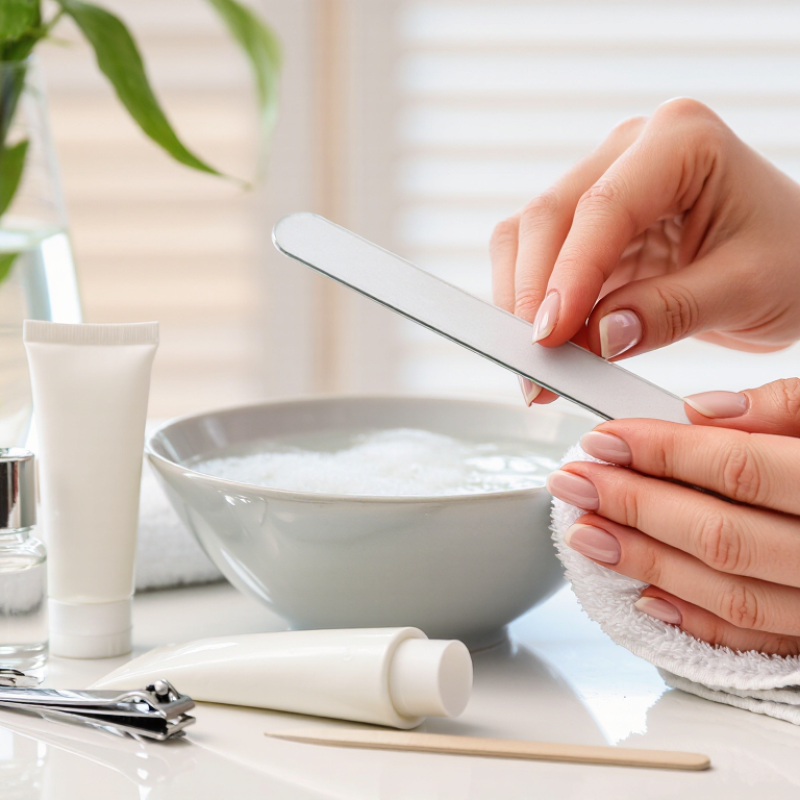
Before buying tools, examine each nail under bright, natural light. Look for splitting, peeling, unusual dark marks, swelling, or tenderness. Notice whether the nail surface feels smooth or develops deep ridges. These details can reveal habits, injuries, or problems that need professional attention. Persistent changes should be checked by a qualified dermatologist, especially when pain or skin irritation appears.
Wash your hands with gentle soap, then dry them completely. Prepare clean nail clippers, a fine-grit file, a soft buffer, a wooden cuticle pusher, and a small nail brush. Add hand cream and cuticle oil to reduce dryness. Disinfect reusable tools before and after each session. Keep personal tools separate from other household items. Clean tools matter.
I usually trim after a shower, when the nails are slightly softer. However, I sometimes cut one nail too short when I rush. That mistake can cause soreness. Leave a small white edge, and shape the nails with light strokes in one direction. Avoid aggressively cutting the cuticles because they help protect the nail area. Gently push them back instead. Stop if the skin feels tender. A routine should feel controlled, not like a test of endurance.
| Assessment Area | What to Check | Recommended Home Action | Essential Tool | Suggested Frequency |
|---|---|---|---|---|
| Nail length and shape | Look for uneven edges, splits, or a length that interferes with daily activities. | Trim gradually and keep the shape consistent across all nails. | Nail clipper and fine-grit nail file | Trim as needed; file rough edges immediately. |
| Nail surface | Notice ridges, peeling, grooves, unusual discoloration, or changes affecting several nails. | Avoid aggressive buffing and monitor persistent or worsening changes. | Soft nail buffer and inspection light | Inspect weekly; buff only occasionally and lightly. |
| Cuticles | Check for dryness, cracks, hangnails, redness, swelling, or tenderness. | Soften with warm water, moisturize, and carefully clip only loose hangnail tissue. | Cuticle stick, clean nippers, and hand cream or cuticle oil | Moisturize daily; do not routinely cut healthy cuticles. |
| Skin around the nails | Look for excessive dryness, peeling, small cuts, or irritation after washing. | Apply moisturizer after handwashing and protect hands during wet or chemical tasks. | Fragrance-free moisturizer and protective gloves | Moisturize after washing and whenever skin feels dry. |
| Nail cleanliness | Check underneath the nails for visible dirt or residue. | Wash hands with soap and water; clean gently without digging under the nail. | Mild soap and soft nail brush | During regular handwashing and after visibly dirty tasks. |
| Tool hygiene | Confirm that tools are clean, dry, intact, and used only by one person. | Wash reusable tools with soap and water, then dry them thoroughly before storage. | Tool-cleaning brush and disinfecting solution suitable for the material | Before and after use; replace damaged tools. |
| Filing technique | Check whether filing causes heat, discomfort, or additional peeling. | Use gentle strokes in one direction and avoid excessive pressure. | Fine-grit emery board or glass file | As needed, especially after trimming. |
| Warning signs | Persistent pain, swelling, pus, marked color change, separation from the nail bed, or sudden widespread changes. | Pause cosmetic care and seek advice from a qualified healthcare professional. | Clean observation tools only; avoid self-treatment of suspected infection. | Assess promptly when symptoms appear. |
Starter routine: Wash and dry your hands, inspect each nail, trim only when needed, file rough edges gently, moisturize the nails and surrounding skin, and clean your tools before storing them.
An effective home routine starts with clean hands, clean tools, and realistic goals. Wash your hands with soap and water for at least 20 seconds, then dry them completely. The CDC reports that proper handwashing can reduce respiratory illnesses by 16–21 percent. That matters before touching nail edges. Disinfect clippers and files according to their care instructions. Keep it simple. I once shared a nail file while traveling. It seemed harmless, but it was poor hygiene.
The American Academy of Dermatology recommends trimming nails regularly and avoiding aggressive cutting. Fingernails can follow their natural curve, while toenails should be cut straight across. Leave a small white edge to reduce accidental skin cuts. Clip after bathing, when nails are softer, but do not pull or bite hangnails. Snip them carefully with clean clippers. Never cut the cuticle deeply. It helps protect the nail root from irritation and infection.
Shape rough edges with a fine-grit file, moving gently in one direction. Sawing rapidly can create splits, especially when nails are thin or dry. Avoid digging underneath the nail with sharp objects. I still sometimes file too quickly, then notice a small crack later. That mistake reminds me that neatness is not the same as safety. The AAD advises seeking medical care for persistent redness, swelling, drainage, or pain. People with diabetes or poor circulation should ask a healthcare professional before trimming difficult nails.
Healthy cuticles protect the narrow gap between your nail and skin. They help block bacteria and reduce irritation. In my home routine, I soften them with warm water for only three to five minutes. Then, I gently push back loose skin with a clean wooden stick. I never cut living cuticle tissue. That seal matters. I used to trim too much, thinking neat nails required a sharp edge. My fingertips became sore, so I changed that habit.
Tips: Wash your hands before every session. Use clean, smooth tools. Apply cuticle oil or a fragrance-free cream after drying. Massage lightly around each nail, especially near the sidewalls. Do not pull hangnails. Clip only the detached piece with sanitized nippers. If a tool feels rough, replace it. Small damage can become a painful split.
Keep the routine simple and consistent. Moisturize after handwashing when possible. Avoid pushing cuticles when they feel tender, cracked, or swollen. Redness, warmth, pus, or increasing pain may signal an infection. Stop home care and seek advice from a qualified healthcare professional. I still occasionally rush through one hand, and the result looks uneven. That is a useful reminder: gentle care works better than perfection.
Moisturizing nails and hands is a practical starting point. Dry skin can make nails feel rough, split, or peel more easily. The American Academy of Dermatology Association recommends applying moisturizer to nails and cuticles after washing. I keep a fragrance-free cream beside the sink. That small habit helps.
Use lukewarm water, not hot water. Pat your hands dry, leaving slight dampness behind. Massage cream over your palms, fingertips, nail plates, and cuticles. Pay attention to the skin beside each nail. It often cracks first. At night, apply a thicker ointment and wear soft cotton gloves. This feels slightly awkward, but it reduces overnight moisture loss.
Hand hygiene still matters. The World Health Organization’s Guidelines on Hand Hygiene in Health Care recommend washing with soap and water for 40–60 seconds. Alcohol-based hand rub usually takes 20–30 seconds. Repeated cleansing can remove surface oils, so moisturize afterward. Do not cut the cuticles. Gently push them back only after bathing, if needed. Wear gloves while washing dishes or handling cleaning solutions. I sometimes forget them, and my fingertips show the mistake quickly. A careful routine may not produce dramatic results immediately. Nails grow slowly, and damaged areas need time to move forward.
A consistent weekly nail care routine is more useful than occasional intensive treatments. Set aside 15 to 20 minutes on the same day each week. I prefer after a shower, when nails are clean but not overly soft. Remove old polish gently, then inspect each nail for splitting, discoloration, swelling, or tenderness. Trim with clean clippers, keeping a little free edge instead of cutting into the corners. File in one direction with a fine-grit file. Short, even nails are easier to maintain. I learned this after filing too aggressively and creating thin, peeling edges. That mistake took weeks to grow out.
Tips: Keep tools clean and dry, and never share them. Massage cuticle oil or plain moisturizer around the nail plate and sidewalls. Avoid cutting cuticles, because they help protect the nail fold from irritation. If you use polish, apply thin coats and let each layer dry. Wear gloves during dishwashing or prolonged cleaning. Repeated wet and dry cycles can weaken nails. Not glamorous, but effective.
Record one detail each week, such as peeling, hangnails, or increased brittleness. This simple log helps you adjust filing pressure and moisturizing habits. Seek professional advice if pain, persistent color changes, nail separation, or swelling appears. Home care should support healthy nails, not hide a problem. My routine is still imperfect; I sometimes skip moisturizing when busy. I return to the schedule without overcorrecting.
Create a consistent weekly nail care routine by combining daily hydration with one focused maintenance session each week.
How to use this routine: Moisturize your hands and cuticles every day, file and shape your nails once a week, trim when needed, and disinfect tools after use. Keeping the routine simple makes it easier to follow consistently.
Check each nail under bright, natural light. Look for splitting, peeling, swelling, tenderness, or dark marks. Deep ridges also deserve attention. Persistent changes need professional advice.
Prepare clean clippers, a fine-grit file, a soft buffer, and a wooden cuticle pusher. A small nail brush helps remove debris. Keep hand cream and cuticle oil nearby. Clean tools matter.
Disinfect reusable tools before and after each session. Keep personal tools separate from household items. Replace any tool with a rough or damaged surface. Small flaws can cause painful splits.
Trimming after a shower can make nails slightly softer. Leave a small white edge. Shape with light strokes in one direction. Rushing may cause soreness. I still sometimes cut one nail too short.
Soften cuticles in warm water for three to five minutes. Gently push back loose skin with a clean wooden stick. Do not cut living cuticle tissue. That protective seal matters.
Do not pull hangnails. Clip only the detached piece with sanitized nippers. Apply cuticle oil or fragrance-free cream afterward. Stop if the surrounding skin feels tender.
Dry your hands completely, then apply hand cream or cuticle oil. Massage lightly around each nail and sidewall. Regular moisture can reduce dryness. Simple works best.
Stop if you notice redness, warmth, pus, swelling, or increasing pain. Avoid pushing tender or cracked cuticles. A qualified healthcare professional should assess possible infection or persistent irritation. Do not force the routine.
Learning how to start a nail care routine at home begins with assessing your nails for dryness, peeling, uneven edges, or signs of irritation, then gathering simple tools such as a nail clipper, file, gentle brush, cuticle stick, and hand moisturizer. Clean your hands and nails thoroughly, trim them carefully to a comfortable length, and shape the edges in one direction to help reduce splitting. Avoid cutting cuticles deeply; instead, soften them after washing and gently push them back only when necessary.
Moisturizing your nails, cuticles, and hands regularly can help prevent dryness and improve overall comfort. To maintain healthy-looking nails, create a consistent weekly routine that includes cleaning, trimming, shaping, gentle cuticle care, and moisturizing. Pay attention to changes in nail color, texture, or sensitivity, and pause your routine if discomfort occurs. With patience and gentle habits, home nail care can become a simple and sustainable part of personal grooming.

Plek Beauty