Why are natural nail care products becoming popular? The answer begins with changing expectations around beauty, safety, and everyday wellness. Consumers increasingly want visible results without harsh-feeling routines. A plant-based cuticle oil, a glass nail file, and a breathable treatment can fit naturally beside skincare products. The shelf is changing.
Grand View Research valued the global nail polish market at approximately $15.6 billion in 2022. Its Nail Polish Market Size, Share & Trends Analysis Report projected steady growth through 2030. However, nail polish data does not equal natural nail care data. This distinction matters. Market categories often overlap, making exact demand difficult to measure. The Business Research Company also identified strong expansion across the broader natural cosmetics market in its 2024 market analysis. These reports suggest a supportive environment, not automatic proof that every natural product performs better.
Consumers are also reading labels more carefully. They notice plant oils, fewer synthetic fragrances, recyclable packaging, and cruelty-free claims. Mintel’s beauty research consistently shows that ingredient transparency influences purchase decisions. Yet “natural” remains an imperfect term. It may describe sourcing, marketing language, or a limited ingredient list. It does not guarantee safety, clinical effectiveness, or longer wear. Professional nail technicians often judge products by hydration, application control, removal time, and client feedback. That practical experience adds useful evidence. Still, personal results vary. A sensitive customer may love jojoba oil, while another may experience irritation. Natural nail care is gaining attention, but careful testing remains essential. The trend feels promising, not flawless.
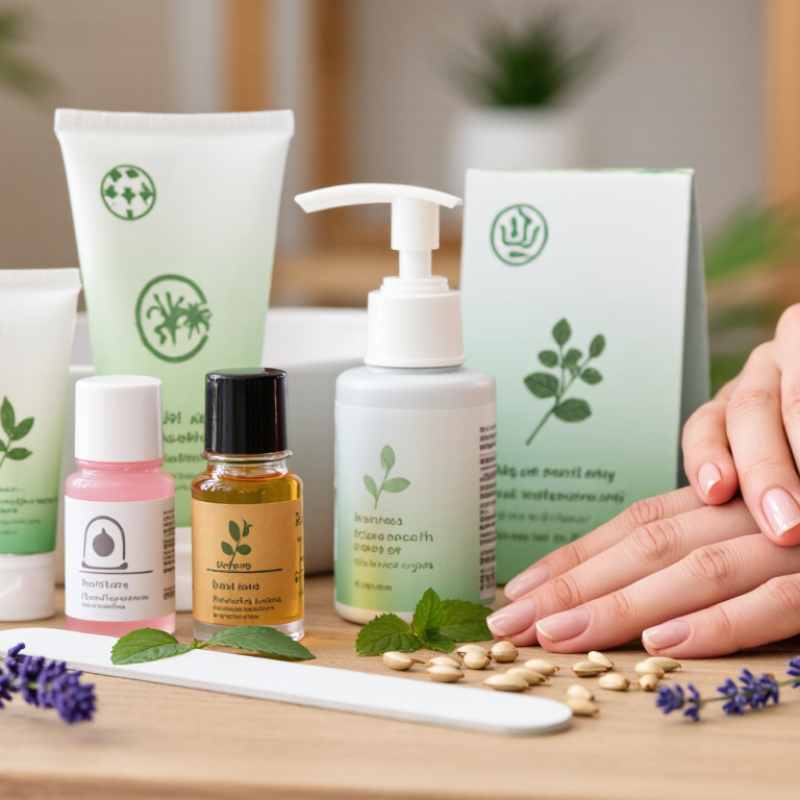
Why Are Natural Nail Care Products Becoming So Popular?
The rise of natural nail care products reflects a wider shift toward ingredient awareness. Consumers now inspect labels before buying cuticle oils, removers, and polish. Grand View Research estimates that the global natural cosmetics market reached about USD 36.6 billion in 2023. It also projects roughly 9% annual growth from 2024 to 2030. Nail care is benefiting from this wider movement.
Natural formulas often use plant oils, mineral pigments, and simpler ingredient lists. They may feel gentler during frequent manicures, especially when nails are dry or peeling. However, “natural” does not automatically mean safer or more effective. Allergies can still occur. Some botanical oils may irritate sensitive skin. A 2024 report from the Personal Care Products Council also highlights growing consumer demand for transparent safety information. That matters more than attractive wording on packaging.
Tips: Check the full ingredient list, not only the front label. Choose products with clear usage directions and patch-test unfamiliar oils. Keep nails dry between applications, and avoid aggressive filing. Professional nail technicians can also assess splitting, discoloration, or persistent soreness. I once assumed a natural product needed no caution; that assumption was too simple. Even gentle care can become harmful when used too often. Reliable choices require evidence, clean tools, and realistic expectations.
Natural nail care products are becoming popular because many people prefer simpler, plant-based formulas. Key ingredients often explain their appeal. Jojoba oil closely resembles the skin’s natural oils, helping soften dry cuticles without a heavy finish. Sweet almond oil adds lightweight moisture and can reduce rough, flaky edges. Shea butter creates a richer protective layer, especially during colder months. Vitamin E, also called tocopherol, supports the formula’s conditioning effect and helps protect oils from oxidation.
Tips: Read the full ingredient list before buying. Apply cuticle oil after washing your hands. Massage it around the nail plate and sidewalls. Less is often enough. Patch-test products containing essential oils, botanical extracts, or nut oils. Stop using a formula if redness, burning, or swelling appears.
Professional nail care still requires realistic expectations. Natural does not automatically mean gentle or effective for everyone. Tea tree oil and citrus oils may irritate sensitive skin when used incorrectly. Biotin appears in many nail products, but topical evidence remains limited. I would not treat it as a guaranteed solution for weak nails. Formula quality, concentration, storage, and personal tolerance all matter. In practice, consistent moisturizing often produces more noticeable results than an impressive ingredient list. Even careful routines can fail when nails face frequent soaking, scraping, or harsh detergents.
Many people now choose natural nail care products because they want gentler routines for their nails and surrounding skin. In daily use, simple ingredients can make a visible difference. Glycerin helps attract moisture, while plant oils can soften dry cuticles. Shea butter creates a protective layer after hand washing. These ingredients may reduce roughness and small cracks when used consistently.
Healthy nails begin with the skin around them. Cuticles protect the nail area from irritation and unwanted microbes, so cutting them too deeply can cause problems. I usually apply a small amount of cuticle oil after washing my hands, especially before bed. The nails feel less brittle the next morning.
However, natural does not always mean harmless. Essential oils and botanical extracts can irritate sensitive skin, particularly when highly concentrated. A patch test is sensible.
Professional nail specialists often recommend moisturizing, gentle filing, and breaks between harsh treatments. Nail products should not promise to repair serious discoloration or pain. Those signs deserve advice from a qualified healthcare professional.
I once assumed that an intensely scented oil worked better, but the fragrance only made my fingertips itchy. That experience changed my routine. Ingredient lists matter more than attractive claims, and results can vary with allergies, climate, and hand-washing habits. Consistency helps. Perfect routines do not.
Natural nail care is gaining attention because shoppers increasingly connect personal routines with environmental and ethical choices. IBM’s 2020 consumer study found that 57% of respondents were willing to change their shopping habits to reduce environmental impact. Nail care reflects this shift through plant-based ingredients, recyclable packaging, and formulas designed with fewer persistent chemicals.
The ethical question is just as important. Consumers want clearer ingredient sourcing, responsible labor practices, and less animal testing. The 2023 Global Sustainability Index Institute report showed that sustainability reporting among major companies continues to expand, yet transparency remains uneven across personal-care supply chains. A recyclable bottle means little if its ingredients or labor conditions remain unclear. That matters.
Industry growth also reveals a tension. Grand View Research valued the global nail polish market at approximately US$15.6 billion in 2022, with demand supported by new “clean” and natural-positioned products. However, natural does not automatically mean safer, fairer, or lower-impact. Some botanical ingredients require intensive farming, water, and transport. Packaging claims can also sound greener than they are. From a professional perspective, shoppers should examine full ingredient lists, credible certification standards, refill options, and disposal guidance. The category still needs better lifecycle data, especially for removers, disposable tools, and mixed-material packaging. Convenience remains part of the problem.
| Popularity Driver | Verified Data or Regulation | Relevance to Nail Care | Likely Consumer Response | Reference |
|---|---|---|---|---|
| Plastic and packaging concerns | The world generated approximately 353 million tonnes of plastic waste in 2019, and only about 9% was recycled. | Nail polish bottles, caps, brushes, removers, and shipping materials add to the wider packaging-waste problem. | Consumers may prefer refillable, recyclable, lightweight, or minimally packaged nail-care products. | OECD, Global Plastics Outlook |
| Packaging-specific environmental pressure | Packaging represented approximately 40% of global plastic waste in 2019, according to the OECD’s global plastics analysis. | Because nail products are often sold in small containers and sets, packaging can be a visible part of their environmental footprint. | Clear recycling instructions and reduced secondary packaging can improve perceived sustainability. | OECD, Global Plastics Outlook |
| Animal-welfare expectations | In the European Union, animal testing for finished cosmetic products was banned in 2004; ingredient-testing restrictions began in 2009, with the final marketing restrictions taking effect in 2013. | Nail polishes, treatments, removers, and cuticle products are part of the cosmetics category covered by these rules. | Ethical claims such as cruelty-free testing policies can influence purchasing decisions, especially among values-driven consumers. | European Commission, Cosmetics and Animal Testing |
| Demand for ingredient transparency | Cosmetic products sold in the EU must display ingredients using a standardized ingredient-naming system, commonly known as INCI labeling. | Ingredient lists help shoppers compare solvents, plasticizers, fragrances, pigments, conditioning agents, and plant-derived ingredients. | Consumers are more likely to trust products that provide complete, readable, and specific ingredient information. | European Commission, Cosmetic Ingredient Names |
| Interest in “natural” formulations | The term “natural” does not have a single legal definition for cosmetics in the United States. Product claims therefore need to be evaluated through ingredient lists and supporting evidence. | Plant-derived or naturally sourced ingredients may appeal to shoppers seeking simpler routines, but natural origin alone does not prove safety or sustainability. | Consumers may increasingly look for transparent sourcing, concentration details, safety information, and credible certification. | U.S. Food and Drug Administration, Natural and Organic Cosmetics |
| Lower-waste purchasing habits | In the EU, packaging waste reached approximately 188.7 kg per person in 2021, while the packaging-recycling rate was approximately 64.6%. | Small nail-care containers can be difficult to empty and recycle because they may contain residues or combine glass, plastic, metal, and mixed components. | Products designed for complete use, easy separation, or responsible disposal may appear more environmentally responsible. | Eurostat, Packaging Waste Statistics |
| Preference for responsible production | The ISO 16128 framework provides guidance for calculating and communicating the natural and organic content of cosmetic ingredients, but it does not by itself certify product safety, ethical sourcing, or environmental performance. | Nail-care shoppers can distinguish between a product’s natural-content percentage and broader claims about labor, sourcing, packaging, or biodegradability. | More specific claims and independently verifiable information can reduce greenwashing concerns. | ISO 16128, Natural and Organic Cosmetic Ingredients |
| Health and indoor-air awareness | Nail products can contain volatile organic compounds, and exposure depends on the ingredients used, the amount applied, ventilation, and frequency of use. “Natural” status does not automatically mean VOC-free. | Consumers may seek low-odor, solvent-reduced, or clearly labeled formulas for home use and shared indoor spaces. | Demand may shift toward transparent ventilation guidance and ingredient-specific safety information rather than broad “clean” claims. | CDC/NIOSH, Nail Salon Safety |
Note: “Natural” is not a universal guarantee of better environmental performance, safer chemistry, or ethical sourcing. Product-level evidence, transparent ingredients, packaging information, and credible certifications are more reliable indicators.
Why Are Natural Nail Care Products Becoming So Popular?
The natural nail-care movement is growing, but “natural” does not automatically mean safer. Grand View Research estimated the global nail-care products market at about US$23.1 billion in 2023, with continued growth forecast through 2030. This expansion reflects demand for simpler ingredients and lower-odor routines. Yet market growth can encourage vague claims. The U.S. Food and Drug Administration does not formally define “natural” for cosmetics. Labels need careful reading.
Plant oils, botanical extracts, and essential oils may trigger irritation or allergic contact dermatitis. Fragrance is a common problem, even when it sounds gentle. Water-based formulas may also require effective preservatives. Poor storage can allow contamination. “Chemical-free” is not scientifically meaningful; every ingredient is a chemical. Product performance may be another compromise. Natural polishes can chip sooner, dry unevenly, or require more coats. I have found that “gentle” products still sting around small cuts. That experience is easy to dismiss, but it should not be. People with eczema, damaged cuticles, or known acrylate allergies need professional advice. FDA guidance also states that most cosmetic products and ingredients are not preapproved before sale.
Tips: Read the full ingredient list, not only front-label claims. Avoid broken skin. Patch-test a small area for 24–48 hours, when appropriate. Stop after burning, swelling, or persistent redness. Keep bottles closed and away from heat. Discard products with changed smell, color, or texture. Ask a dermatologist about recurring reactions.
Consumers increasingly check ingredients before buying oils, removers, and polish. Many prefer simpler formulas and lower-odor routines. Environmental concerns also influence daily beauty choices.
No. Natural ingredients can still cause irritation or allergies. Essential oils, plant extracts, and fragrance may affect sensitive skin. “Natural” is not a safety guarantee.
Read the complete ingredient list, not only the front label. Look for clear directions and credible safety information. Vague claims deserve caution.
Some formulas may feel gentler during frequent manicures. Plant oils can support a more comfortable routine. Results vary. They cannot fix every nail problem.
Patch-test an unfamiliar product when appropriate. Use a small skin area and observe it for 24–48 hours. Avoid testing on broken skin. Stop after burning, swelling, or lasting redness.
Not automatically. Some plant ingredients need substantial water, farming, and transport. Recyclable packaging helps, but it tells only part of the story. Consider refill options and disposal instructions.
Some natural-positioned polishes may chip sooner or dry unevenly. They may require several coats. Performance can be a compromise. That should be stated clearly.
Keep bottles closed and away from heat. Use clean tools and avoid aggressive filing. Keep nails dry between applications. Discard products with changed smell, color, or texture.
Ask a dermatologist about recurring irritation or allergic reactions. A nail technician can assess splitting, discoloration, or persistent soreness. Eczema and known acrylate allergies need extra care. I once assumed “gentle” meant harmless. That was too simple.
Natural nail care products are gaining attention as more people seek gentler, simpler, and more transparent beauty routines. The answer to “why are natural nail care products becoming popular” lies in growing interest in plant-based oils, nourishing vitamins, mineral-rich ingredients, and formulas with fewer harsh additives. These products may help moisturize dry cuticles, support stronger-looking nails, and protect the surrounding skin when used consistently and correctly. Their appeal also comes from environmental and ethical concerns, including more responsible sourcing, reduced packaging waste, and cruelty-free production practices.
However, natural does not automatically mean suitable for everyone. Some botanical ingredients can still cause irritation or allergies, while certain formulas may require more frequent use or provide slower results than conventional alternatives. Consumers should read ingredient labels carefully, consider their personal sensitivities, choose products from transparent manufacturers, and perform a small patch test when appropriate. By balancing personal needs with ingredient quality and sustainability, users can make informed choices about natural nail care.

Plek Beauty